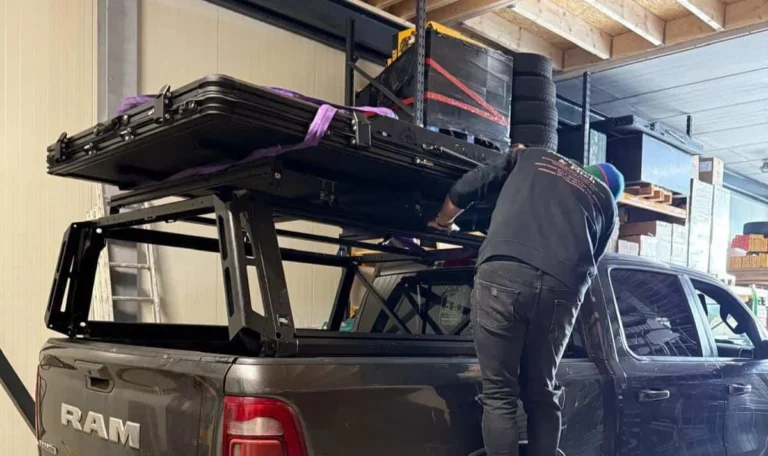



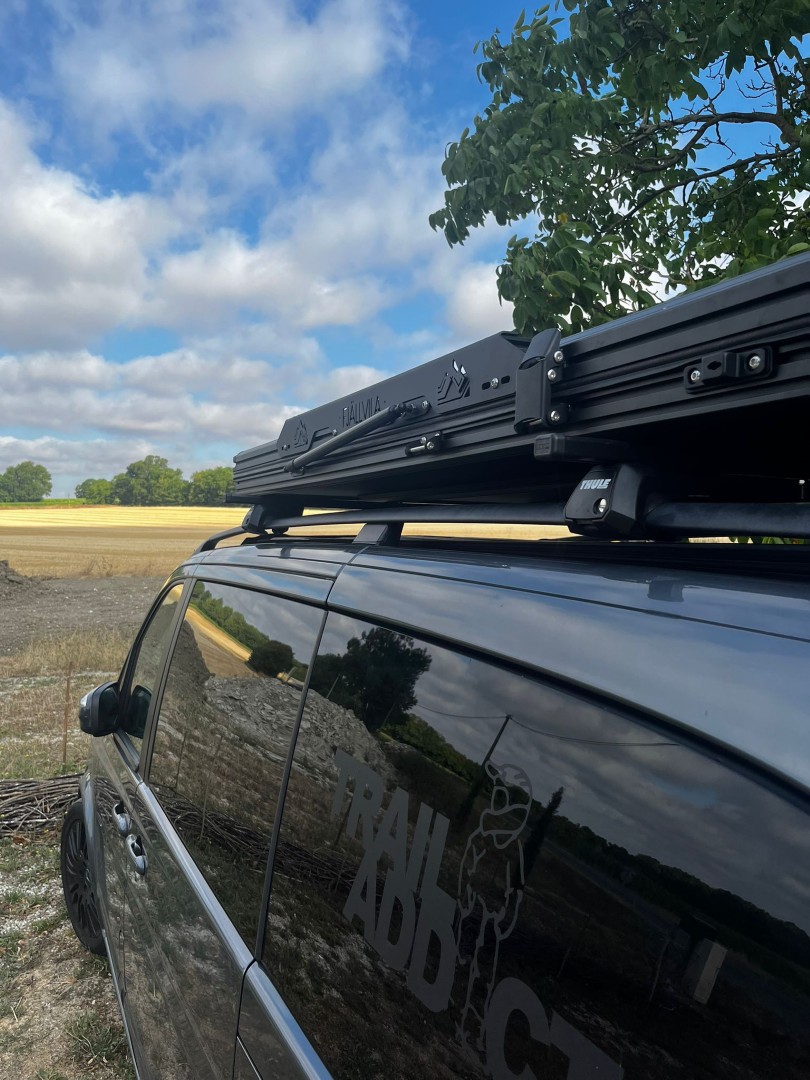
Are you driving with a rooftop tent or other roof cargo? If so, it needs to be safe. In this blog, you’ll read about what roof loads are, how to calculate your roof load and what to watch out for with roof loads.
What is roof load?
The dynamic roof load is the weight you can safely carry on the roof of your car while driving. The static roof load (when stationary) is substantially higher, which is why you can sleep in a rooftop tent.
Dynamic vs. static
When you drive with weight on the roof of your car, the center of gravity is moved. This affects handling. Overtilting in turns or a longer braking distance, for example. This is why a manufacturer specifies a dynamic roof load; with this weight on the roof, the manufacturer guarantees safe driving. Standing still, the roof can carry much more. In practice, this is often 3 to 5 times the dynamic value. remember that the roof structure is designed to bear the weight of the car, even when it lands upside down. Manufacturers rarely give a static value.
Here’s how to check your set-up
Determine the dynamic roof load of your car. Add the actual weight of: roof racks + roof tent + ladder + accessories.
Does the total weight exceed your dynamic roof load? Choose a lighter tent, leave accessories in the car or move weight inside. Lots of miles and frequent set-up and take-down? A hardcover rooftop tent is quieter and faster. If your structural height is too high, a roof tent on trailer is often the smartest solution. If you drive a bus or camper, check if your carriers and mounting points can handle heavier loads.
Important points to consider when determining roof loads
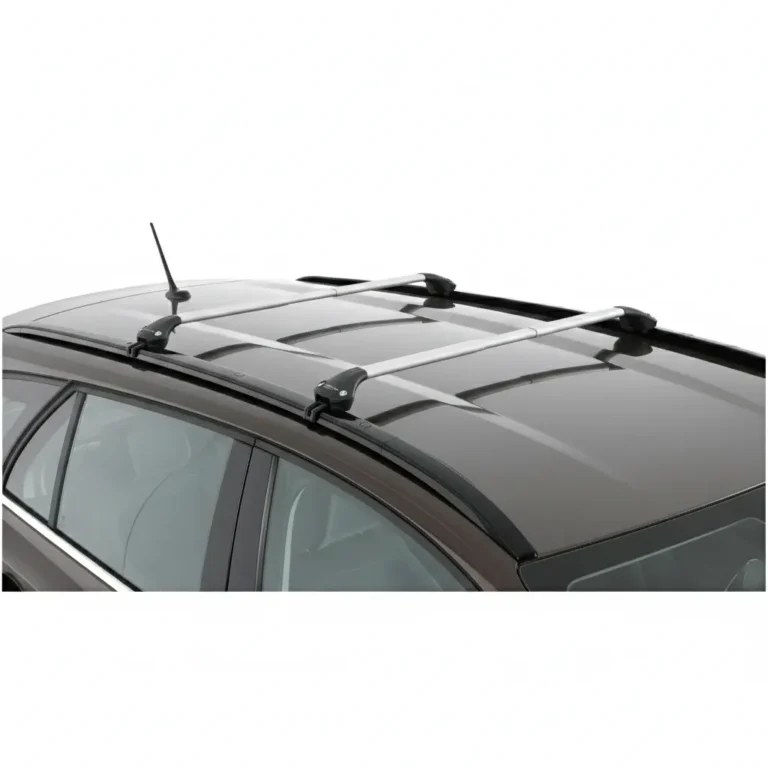
- Check roof type: open/flush rails, fixpoints or smooth roof. This will determine your carriers and mounting.
- Panoramic roof/glass: not every car with a glass roof is suitable but there are several brands where it is possible. Check the manual or ask the dealer.
- Carrying capacity of carriers: counts in your sum. Take the actual weight of carriers and feet.
- Carrier spacing: ideally 70-110 cm, depending on the length of your tent. Too close together is less stable.
- Sum by margin: carriers + roof tent + ladder + accessories ≤ dynamic roof load.
- Distribute weight: plan now where heavy items will go (preferably low, in the car).
Choose the right rooftop tent for your roof load
Want to see immediately which setup fits your car and roof load? Check out our complete overview of roof tentsChoose for fast and silent driving with a hardcover roof tentor go for extra sleeping space with roof tents 4 persons. Do you have questions about weight, carriers or mounting? Send us a picture of your roof; we’ll think with you.